

§ 04

Status Tracker

Claims in the case that are contested or not yet known, with what each side says and where it comes from.

We change a label only when the public record changes, and we note each change in the timeline. Labels are defined in the methodology. Last updated November 8, 2026.

We cite the civil complaint by paragraph but do not link to it, because it contains details that could identify the plaintiff and names people who are not parties to the case.

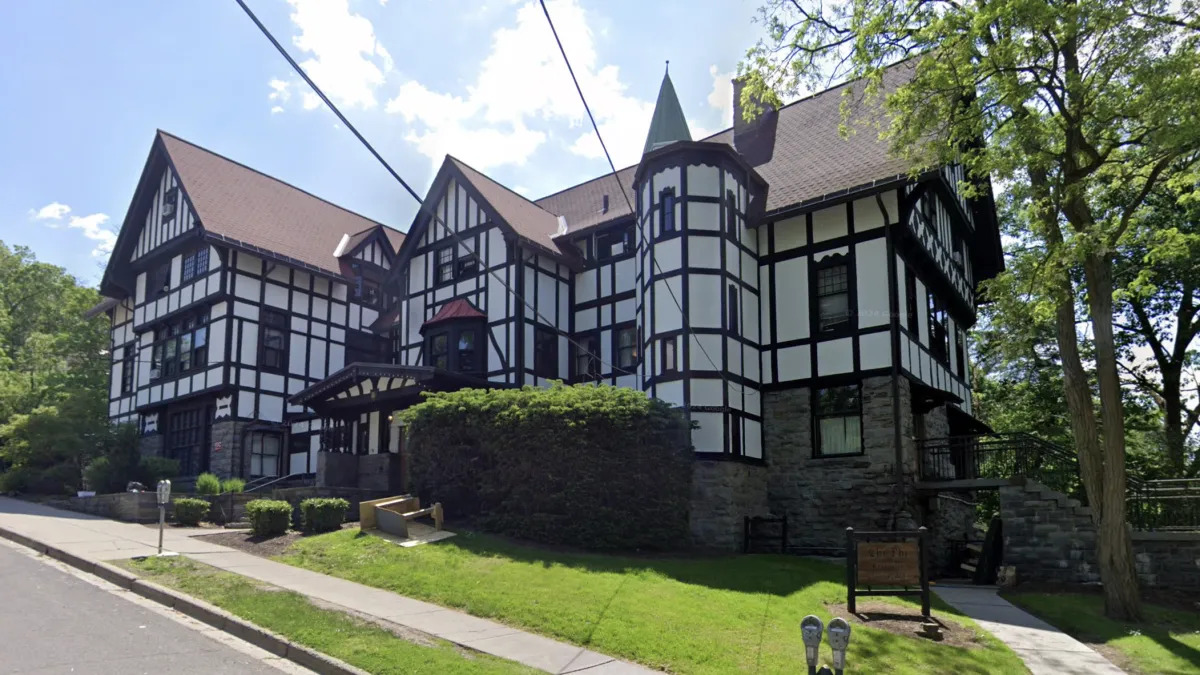
Photo slot. Upload a file named photo-status.jpg to fill it. Exterior of a Tudor-style fraternity house on a tree-lined street.

Reading the labels

Alleged
Stated by a party, usually in a court filing, and not yet tested or established.
Disputed
Alleged by one party and denied or contradicted by another.
Confirmed
Established by a court ruling, a public record, or agreement between the parties, or independently verified by more than one reliable source.
Unresolved
Not yet known from the public record.

C7-C-01

Disputed

What discipline the students received

The complaint alleges that the accused students were temporarily suspended and allowed to mitigate their conduct by submitting essays to Cornell.

The plaintiff
The complaint says temporary suspensions were issued on or about November 8, 2024, and that the students "were afforded the opportunity to mitigate their conduct by submitting essays" (complaint, para. 181). Her attorney, Thomas P. Giuffra, told CBS News that two of the students were expelled and that the other five received lesser sanctions, including suspensions, workshops, and essays.
Cornell
Cornell says none of the students "were offered the opportunity to write essays as a sole consequence of their involvement," and that a hearing panel issued "a range of sanctions, which included expulsions and suspensions." It says federal privacy law prevents it from disclosing information about individual students, and that it "imposed different sanctions based on the findings and circumstances involving each student." On September 29, 2026, President Michael I. Kotlikoff told student government that two of the accused students were expelled, two were suspended for at least two semesters, one graduated before any sanction could be imposed, and two were found not responsible for sexual misconduct, according to CBS News.
University records
The New York Times reported on October 3, 2026, that Cornell's records show two students were expelled; two were suspended and placed on disciplinary probation, with no-contact orders, educational modules and reflection papers; one, who had graduated, was barred from campus for three years; and two received no-contact orders, educational modules and reflection papers. So reflection papers were part of four students' sanctions, and for two of them they came with no-contact orders and educational modules rather than a suspension.
Not known from the public record
We have not seen the records ourselves. We do not publish which student received which outcome. Also unknown: what the suspensions required for a student to return, and whether any essay or reflection paper was part of any sanction. Cornell's procedures list "reflection papers" among possible educational sanctions, alongside suspension of up to three years and expulsion; this does not show what was imposed in this case.

Sources: Cornell FAQ, updated September 30, 2026, CBS News, The Cornell Daily Sun, citing The New York Times, Cornell statement, September 28, 2026, Cornell statement, September 21, 2026, The Cornell Daily Sun, Cornell Policy 6.4 student procedures (August 5, 2024), section 26.13

C7-C-02

Unresolved

What Cornell's investigation found

Cornell has not published its findings in its Title IX process. Its president has described the outcomes in aggregate, and records obtained by The New York Times show the hearing panel concluded that two of the seven students sexually assaulted the plaintiff. These are findings of a university process, not of a court.

Cornell
Cornell says it conducted a Title IX investigation "over the course of several months," followed by a hearing at which a panel of trained faculty and staff heard evidence over multiple days, and that the panel issued sanctions including expulsions and suspensions. Under Cornell's procedures, a hearing panel considers sanctions only after it finds a student responsible, using a "more likely than not" standard. On September 29, 2026, President Michael I. Kotlikoff told student government that two of the accused students were found not responsible for sexual misconduct, according to CBS News.
The plaintiff
The complaint says Cornell began its Title IX investigation on or about January 14, 2025, held at least twelve hearings between May 2 and May 29, 2025, and, "upon information and belief," has concluded it (complaint, paras. 183 to 186).
The accused
An attorney for one of the students has denied the allegations, according to ABC News. Jeremy Saland, attorney for Scott Kretzschmar, told CBS News that the university found his client not responsible for anything the plaintiff alleges in her complaint.
Not known from the public record
The full findings, which Cornell has not released and we have not seen. We do not publish which student received which finding.

Sources: Cornell statement, September 28, 2026, CBS News, Cornell Policy 6.4 student procedures (August 5, 2024), sections 26.2 and 26.13, The Cornell Daily Sun, ABC News

C7-C-03

Disputed

Why no criminal charges were filed in 2024

The District Attorney says no charges were filed because the plaintiff's 2024 sworn statement did not describe a crime under New York law; the plaintiff's attorney says the case was not investigated thoroughly.

The District Attorney
The DA says Cornell University Police asked his office in November 2024 to review the plaintiff's sworn statement, and that multiple prosecutors concluded the facts it described did not establish a lack of consent as defined in New York Penal Law. He says the decision "was not because the case would have been difficult to prove in court," and that the plaintiff's credibility "was never in question." He says neither the plaintiff nor her attorneys contacted his office afterward to ask for reconsideration.
The plaintiff
Her attorney has said she spoke with no one other than the officer who took her original complaint, and that "opportunities to fully investigate these crimes were lost." He has also told the Associated Press she was "misled" into believing the criminal investigation was continuing after it had ended. On October 1, 2026, he said he and his client "had no faith" in the District Attorney's "ability or desire to actively investigate and prosecute this case," according to NBC News.
The Governor
Executive Order No. 64 states that the District Attorney declined to prosecute "without speaking to Jane Doe" and relied in part on her sworn statement to campus police, "which reportedly omitted key portions of Jane Doe's account, including Jane Doe's unequivocal assertion that she had been sexually assaulted." The order makes the Attorney General special prosecutor in place of the District Attorney.

Sources: District Attorney's statement, September 28, 2026, ABC News, The Ithaca Voice, Executive Order No. 64, NBC News, The Associated Press via PBS News

C7-C-04

Unresolved

Whether the 2024 sworn statement differs from the civil complaint

The District Attorney says the plaintiff's November 2024 sworn statement gives a substantially different account from the one in the civil complaint.

The District Attorney
The DA says the six-page statement "did not allege that she was drugged against her will or gang raped," and "described her participation in drug use and sexual conduct as voluntary, conscious, and consensual." His public statement summarizes and quotes it. He says he has decided not to release it for now, citing privacy review and redaction. He told CBS News on September 29, 2026, that his office was never given the full transcripts of her interviews with Cornell University Police.
The plaintiff
The complaint alleges she was drugged and sexually assaulted. Her attorney has not publicly disputed the DA's description of the 2024 statement in the sources reviewed here; he has criticized how the case was investigated at the time. CBS News reported that it obtained, from a source, a transcript of her 2024 interview with Cornell University Police, which it says was the basis for her written statement. In it, according to CBS News, she says, "I can say with 100% confidence I was raped." The District Attorney says the sworn statement his office received did not include that remark. Her attorney confirmed the quote to NPR, citing the transcript. CNN, citing documents obtained by The New York Times, reported that an officer condensed her hours-long interview into the six-page statement, which she corrected by hand and signed the next day.
Not known from the public record
The full text of the 2024 statement and of the interview transcript, neither of which has been released. We have not seen the transcript.

Sources: District Attorney's statement, September 28, 2026, ABC News, CBS News, NPR, CNN

C7-C-05

Disputed

Whether the assault described in the complaint took place

The complaint alleges that seven fraternity members drugged and sexually assaulted the plaintiff at the Chi Phi house.

The plaintiff
The complaint makes these allegations. No court has ruled on them.
The accused
An attorney for one of the students has said the events in the complaint "did not happen." Another student has denied sexual activity or drug use while acknowledging he sent a message included in the complaint, according to ABC News.
Status of legal proceedings
No one has been criminally charged. On October 1, 2026, the Governor appointed the Attorney General as special prosecutor, with power to present evidence to a grand jury "if warranted." Two of the defendants have asked courts to remove her. A judge heard arguments on the first challenge on October 29 without ruling, and by November 5 five of the seven had joined it. No court has ruled on either challenge. Since November 4, former federal prosecutor Jacqueline Kelly leads the investigation for the Attorney General.

Sources: The Ithaca Voice, ABC News, District Attorney's statement, September 28, 2026, Executive Order No. 64, Law Commentary, NBC News, WAMC, Attorney General's statement, November 4, 2026

C7-C-06

Unresolved

The date of the alleged assault

Sources give two different dates for the incident.

October 19 to 20, 2024
The date given in the complaint, and in the District Attorney's summary of the plaintiff's 2024 sworn statement.
October 25, 2024
The date given in a Cornell University Police crime alert issued November 8, 2024, as reported at the time by The Cornell Daily Sun and The Ithaca Voice. The alert described a report, received that day, of a sexual assault by several men on the 100 block of Edgemoor Lane. Both the Chi Phi house and one other fraternity house are on that block.
Not known from the public record
Whether the crime alert refers to the same report, and if so, why the dates differ. We have not been able to view the alert at its original source.

Sources: District Attorney's statement, September 28, 2026, The Cornell Daily Sun, November 8, 2024, The Ithaca Voice, November 12, 2024

C7-C-07

Disputed

Whether Ithaca Police investigated the case

The complaint says the case is still being investigated by the Ithaca Police Department; the department says it was never told about it.

The plaintiff
The complaint says, "upon information and belief," that the matter "is also still being investigated by the Ithaca Police Department" (complaint, para. 187).
Ithaca Police Department
The department said on September 28, 2026, that "this incident was not reported to the Ithaca Police Department" and that it "learned of these allegations recently through the media."

Sources: The Cornell Daily Sun, The Ithaca Voice

C7-C-08

Unresolved

Changed from Disputed on October 2, 2026. See C7-T-018.

Whether the District Attorney received the Snapchat screenshot

Cornell says its police gave the District Attorney a screenshot of the fraternity's Snapchat group chat in November 2024. The District Attorney first said he was not clear how it reached his office or whether anyone there looked at it, and later said his office had access to some Snapchat messages.

Cornell
Its FAQ says: "The Cornell University Police Department provided it as part of the evidence supplied to the District Attorney in November 2024." Since October 1, another answer in the FAQ says the police shared "the victim's sworn statement and the Snapchat screenshot."
The District Attorney
He told ABC News: "I'm not clear on exactly how that was given to us, or if anyone here looked at it. That was not critical to our analysis." The Cornell Daily Sun reported that he told ABC News his office never received the image. Later in the week he told CNN that his office had access to some Snapchat messages from the group chat, and received no more than those messages and a six-page investigative report.
Not known from the public record
Whether the messages the District Attorney's Office had included the screenshot cited in the complaint, and what else Cornell University Police sent to the office in November 2024.

Sources: Cornell FAQ, updated September 30, 2026, ABC News, The Cornell Daily Sun, CNN, The Cornell Daily Sun, October 1